Overview
Population
Area
Standard time zone
Local voltage
Country code
Ethnic groups
Currency
Language
Korean is the official language of Korea and most Koreans outside of Seoul will have limited English language skills. Many health and safety online resources will have English translations. Overall, English translation and services in languages other than Korean should not be expected.
Health
The South Korean healthcare system provides comprehensive and accessible medical services. Foreigners with a valid residence permit are eligible for the National Health Insurance system, which offers affordable healthcare services at public facilities. International hospitals will offer multilingual staff and comprehensive medical insurance is recommended.
Security
South Korea is considered to be a safe country, as there are few violent crimes. The main concerns that expats face are petty crimes such as pickpocketing, and natural disasters.
Homosexuality is legal in South Korea; however, societal attitudes may still be conservative in some areas. There is no specific constitutional ban on same-sex marriage, it is not yet legally recognized.
Government Compliance
Outside of the visa and immigration process, South Korea has no local registration requirement. Visa processing time can vary, but skilled workers’ visas average processing time is 4-12 weeks.
Transportation
South Korea’s public transport systems are well-developed. A T-Money card can be purchased from many convenience stores and subway stations to pay for public transport. Driving in South Korea is not considered dangerous, although traffic congestion should be expected, especially in major cities like Seoul. Parking can also be challenging to find in urban areas. Private transport is generally optional for expats living in South Korea due to the availability and efficiency of the public transport system.
Banking
Opening a bank account in South Korea is relatively straightforward, but requirements may vary depending on the bank and account type. Identification documents such as a passport and alien registration card are necessary and requesting mobile and internet banking is required as they are not automatically provided.
Housing
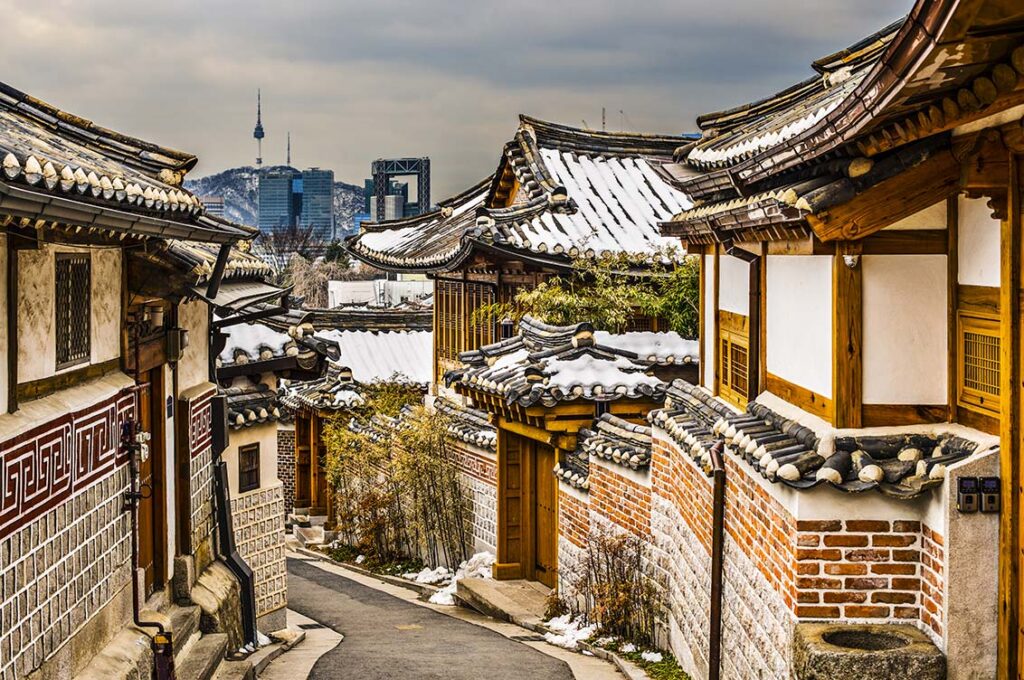
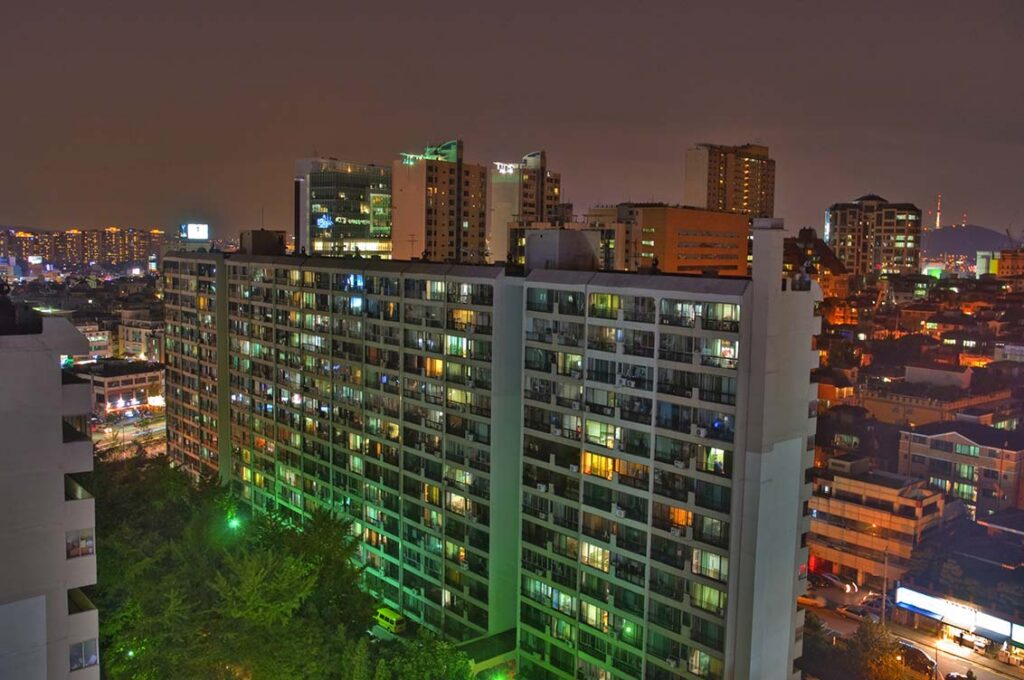
In most cases, leasing in South Korea will require upfront payment of the entire 24 months’ rent when involving typical expat-style housing. Few options exist for temporary or serviced apartments. Tenant commissions are subject to the real estate commission law.
Lease Term / Condition
Typical lease period
Security deposit
Agent fees
Diplomatic clauses /termination
Types of leases
Rental payment cycle
Utilities
Furnishings
The structure of security deposits and agents’ fees are often negotiated in Korea due to the unique nature of traditional lease structures. This also depends heavily on the property and the owner.
Types of housing lease structure
Jeonse (unique and popular Korean lease system)
- No monthly rent / security deposit only
- 60% of the total rental payment amount
- 2-year fixed term.
Wolse (standard lease structure for both local Korean and expat tenants)
- Fixed monthly rent + security deposit
- Security deposit approximately around 12-24 months’ rent amount or more dependent on property value and landlord requirements
- Larger apartments, (eg 3-bedroom in prime locations in Seoul), deposits may range approximately from KRW 100,000,000 to KRW500,000,000 or higher
- 2-year fixed term
- Can be early terminated with 2-3 months’ notice, subject to negotiation and landlord agreement (not commonly accepted).
Ilsibul (accepted concept in expat housing market in popular expat neighbourhoods in Seoul)
- Upfront lumpsum rent payment for entire lease term
- No monthly rent or security deposit
- Commonly 2-year term (fixed term in 1st year and flexible term in 2nd year)
- Can be early terminated with 2-3 months’ notice, subject to negotiation and landlord agreement.
Mortgage registration
Due to the significant upfront housing payment, it is recommended to apply for the Keun Mortgage registration, a protective measure available under the lease that helps safeguard the prepaid rental funds. By registering the mortgage interest against the property, the tenant gains stronger legal protection and priority should the landlord encounter financial difficulties. Without this registration, there is a risk that other creditors or lenders could register their interests first, potentially reducing the tenant’s ability to recover prepaid rental monies. It is recommended to complete the registration at the time the rental payment is made.
Education Overview
There are good international school options to select from in South Korea. The most popular international schools in Seoul remain Dulwich College, Dwight School, Yongsan International School and others. There are no debentures and early applications are encouraged.
Recent Resources

Who Tops the Asian Cities Internationality Index 2026
The Asian Cities Internationality Index 2026 (ACII) highlights a growing reality: the most competitive cities[…]

Updated Asia Situation Update
We are pleased to share the latest Asia Situation Update. This quarter, we feature one[…]

What’s in Store for 2026?
As organizations prepare for the upcoming year, the global mobility landscape continues to evolve rapidly.[…]
Country Guides